
✅ Saving $1,000 is achievable in 4–12 weeks depending on your income and fixed costs
✅ The fastest method combines consistent saving with one-time cash from selling unused items
✅ A separate named savings account is the single most important structural change you can make
✅ Cutting spending alone has a ceiling — a short-term income boost dramatically shortens your timeline
✅ $1,000 is not a complete emergency fund — it is phase one of a longer financial safety plan
✅ This plan works for US and UK savers — specific account recommendations for both are included below
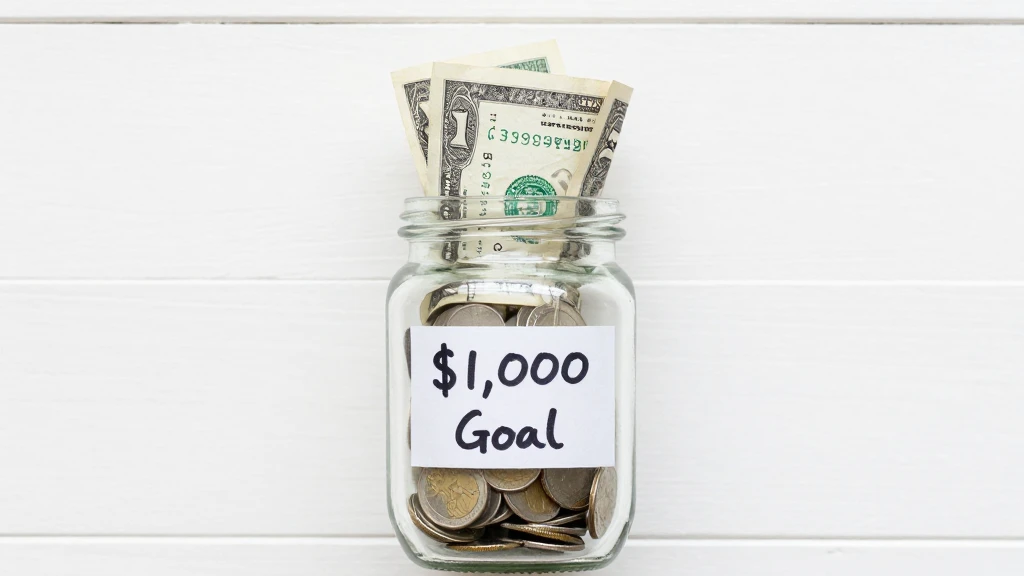
Most people who struggle to save their first $1,000 don’t have a spending problem. They have a system problem. The money comes in, life happens, and by the end of the month there’s nothing left to set aside. If you’ve told yourself you’ll start saving “when things settle down,” that moment rarely arrives on its own.
A thousand dollars isn’t a life-changing number, but reaching it for the first time changes something. It proves you can do it. It removes the constant low-grade stress of having zero buffer. And it creates the habit that every larger financial goal runs on.
This plan is built around real behavior, not budgeting theory. It won’t tell you to stop buying coffee. It will show you where the actual money is hiding and how to move fast without making your daily life miserable.
The Emotional Side of Property Investing
How to Save $1,000 Fast — Quick Overview
Here is the complete plan in six steps. Each step is explained in full detail below.
- Review your last 60 days of bank and credit card statements — find where your money is actually going before making any changes
- Open a separate high-yield savings account — name it “First $1,000” and keep it at a different bank from your main account
- Set up an automatic transfer for the day after payday — even $50 or $75 to start removes the decision from your daily routine
- Cancel or pause 2–3 low-value subscriptions — streaming services, apps, or memberships used less than once a week
- Sell unused items you already own — electronics, clothing, furniture — a realistic weekend of listings generates $150–$400 for most people
- Add a short-term income boost if needed — gig work, freelancing, or an extra shift can add $100–$300 in a single weekend
Why $1,000 Is the Right First Target
Financial advice loves big round numbers. “Save six months of expenses.” “Max out your retirement account.” These are fine goals for later, but they can paralyze someone who’s starting from zero. The gap between nothing and six months of expenses feels so wide that many people don’t start at all.
$1,000 is specific enough to feel achievable and meaningful enough to matter. It covers most car repairs, a medical co-pay, a broken appliance, or an unexpected bill without putting anything on a credit card. That’s the point. You’re not saving for wealth yet — you’re saving for stability.
There’s also a psychological effect worth acknowledging. Reaching a real milestone, even a modest one, creates momentum. People who hit $1,000 are significantly more likely to keep going than people who set a vague goal to “save more” without a defined endpoint.
The Fastest Honest Timeline
Before anything else, be realistic about what fast means. Saving $200 a month gets you to $1,000 in five months. Push that to $350 and you’re there in under three months — a meaningful difference just by finding an extra $150 in your budget. Combine consistent saving with a one-time cash boost from selling unused items or a short weekend of extra work, and four to six weeks becomes a realistic target.
What doesn’t work is setting a dramatic target with no realistic path to hit it. Someone earning $2,800 a month after tax with $2,600 in fixed expenses can’t save $500 a week. That math doesn’t hold, and when the plan fails in week two, so does the motivation.
Set a number you can actually hit based on your real income and fixed costs, then look for ways to increase that number through the steps below. A slower but consistent plan beats an aggressive one you abandon.
How Long to Save $1,000 Based on Monthly Savings Amount
| Monthly Savings | Weeks to $1,000 | With $200 Boost* | Realistic For |
|---|---|---|---|
| $50/month | ~20 weeks | ~17 weeks | Very tight budget |
| $100/month | ~10 weeks | ~8 weeks | Low discretionary room |
| $150/month | ~7 weeks | ~5 weeks | Average budget with cuts |
| $200/month | ~5 weeks | ~4 weeks | Moderate income, focused |
| $300/month | ~3.5 weeks | ~3 weeks | Higher income or side income |
| $400+/month | ~2.5 weeks | ~2 weeks | Strong income or aggressive cuts |
Boost assumes a one-time $200 from selling unused items or a short-term income supplement.
Step 1: Find What You’re Actually Spending
The single most common reason people can’t save is that they have no accurate picture of where their money goes. Not an approximate picture. An accurate one. Most people underestimate their discretionary spending by 30 to 40 percent when asked to guess from memory.
Pull up the last 60 days of your bank and credit card statements. Categorize every transaction. Don’t use a budgeting app that auto-categorizes for you at this stage — do it manually. You’ll catch things that apps regularly misclassify, and the manual process forces you to actually look at each line.
What you’re looking for specifically:
- Subscriptions you forgot you were paying for
- Spending categories that are higher than you assumed
- Small recurring charges that have been running in the background for months
- Any annual fees billed recently that distort your monthly picture
This review typically takes 30 to 45 minutes. Most people find at least $40 to $100 in charges they either forgot about or could easily cancel. That’s money you didn’t know you had.
Common Spending Categories: What to Look For
| Category | Typical Monthly Spend | Action to Take |
|---|---|---|
| Streaming Subscriptions | $30 – $80 | Audit and pause any used less than once per week |
| Food Delivery Apps | $60 – $150 | Set a hard weekly limit or cut for 90 days |
| Gym / Fitness Memberships | $20 – $60 | Pause if attendance is under 3x per week |
| Software & App Subscriptions | $15 – $50 | Cancel duplicates where free-tier replacements exist |
| Impulse Online Shopping | $40 – $120 | Delete saved payment info to add friction |
| Unused Annual Memberships | $50 – $200 (lump) | Identify and cancel before renewal date |
Step 2: Open a Separate Account and Name It
Do not save into your checking account. Money sitting in the same account you spend from gets spent. This isn’t a discipline failure — it’s just how people behave when money is accessible and earmarked for nothing specific.
Open a separate savings account, preferably at a different bank than your main checking account. The slight friction of transferring money between banks makes impulsive withdrawals less automatic. Most online banks in the US, UK, and Canada offer high-yield savings accounts with no minimum balance and no monthly fees — there’s no reason to use a traditional savings account earning near zero.
Name the account something specific. “Emergency Fund” or “First $1,000” works. It sounds like a minor detail, but people consistently make fewer withdrawals from named accounts than from unnamed ones. The label makes the purpose concrete.
Set up an automatic transfer for the day after your paycheck clears. Even $50 or $75 to start. The goal is to make saving happen before you have a chance to spend that money on something else.
How to Screen Tenants the Right Way
Step 3: Cut Spending Strategically, Not Emotionally
This is where most investors and savers get it wrong. They try to cut everything at once, feel deprived by week two, and revert to their original habits by week three. That cycle is demoralizing and counterproductive.
What to Cut First
The better approach is identifying the two or three spending categories that are both high and relatively painless to reduce. Not the things that bring you genuine daily enjoyment — those cuts have a high failure rate. Focus on:
- Subscriptions you use less than once a week (streaming services, apps, memberships)
- Convenience spending driven by poor planning rather than actual preference (last-minute food delivery, buying items you already own but couldn’t find)
- Any recurring charge where a free or cheaper alternative exists and the downgrade is genuinely minor
Try Temporary Cuts First
If cutting feels painful in the first week, you’ve probably cut the wrong things. There’s usually a version of this that produces $100 to $200 per month in savings without requiring you to fundamentally change your lifestyle.
Temporary cuts also work here. Pausing a subscription for 90 days rather than canceling it permanently can be easier to commit to. You don’t lose access forever — you just delay it while you hit the target.
Step 4: Bring In Extra Money, Even a Small Amount
Cutting spending alone has a ceiling. Your fixed costs are what they are, and there’s only so much you can reduce before you’re affecting your quality of life in ways that aren’t sustainable. The other side of the equation is income, and even a modest one-time or short-term boost can dramatically shorten your timeline.
Selling Things You Already Own
Most households have several hundred dollars sitting in unused items. Electronics, clothing, furniture, tools, sports equipment, and kitchen appliances that haven’t been touched in a year or more. Platforms like Facebook Marketplace, eBay, Craigslist, Vinted, or Kijiji (Canada) allow you to move these quickly, often within a week.
A realistic weekend of listing items can generate $150 to $400 for most people. This isn’t theoretical — it’s one of the fastest legitimate ways to close the gap to $1,000 when you’re starting from a low savings base.
Short-Term Earning Options
If your current income genuinely doesn’t leave room for meaningful savings, a short-term supplement can help. This doesn’t require a second job in the traditional sense. Gig platforms, freelance work, tutoring, local odd jobs, or picking up an extra shift if your employer offers it can add $100 to $300 in a single weekend.
The point isn’t to commit to side income permanently. It’s to use a focused burst of extra effort to get over the finish line quickly, then reassess from a position of having that initial $1,000 in place.
When This Plan Doesn’t Work
Watch this short video for a practical overview of what to do when your income barely covers your basic expenses and traditional saving advice stops working.
If the plan above applies to your situation, the sections
below on cutting spending and boosting income are the
most relevant starting points.
Saving $1,000 quickly is genuinely difficult if your income doesn’t cover your fixed costs. Rent, utilities, debt minimums, and food come first. If those costs consume 95 percent or more of your take-home pay, no savings plan can compensate for a math problem that requires either lower fixed costs or higher income — not better habits.
This plan also fails when someone saves the money but doesn’t protect it. A savings account that’s easy to dip into for non-emergencies will gradually empty between paychecks. The separate account with automatic transfers matters precisely because it creates structural protection, not just good intentions.
High-interest debt is another complicating factor. If you’re carrying credit card balances at 20 to 29 percent interest, every dollar sitting in savings is technically losing money relative to paying down that debt. The conventional answer is that a small cash buffer is still worth having even with high-interest debt, because it prevents new debt when emergencies hit. But if your debt carries interest above 20 percent, aggressively paying it down while saving a modest buffer simultaneously may be the more practical path.
Two Myths Worth Challenging
“You need to track every dollar to save effectively”
Detailed expense tracking works well for some people and fails completely for others. The research on this is fairly consistent — people who find tracking burdensome abandon it quickly and often feel worse about their finances afterward because the act of tracking becomes associated with failure. The automated transfer approach sidesteps this entirely. You save first, then spend what’s left without needing to account for every transaction.
“Small amounts aren’t worth saving”
The belief that saving $25 or $50 a week is pointless because it takes too long is one of the more damaging ideas in personal finance. Small consistent amounts build the habit, and the habit is what actually matters. Someone who saves $50 a week for a year has $2,600 and a deeply ingrained behavior. Someone who waits until they can save $500 a month often waits indefinitely.
Step 5: Protect the Money Once You Have It
Reaching $1,000 means nothing if it’s gone by the following month. Define in advance what this money is for and what it is not for. A streaming service isn’t an emergency. A concert ticket isn’t an emergency. A car repair, a medical bill, or an urgent home repair — those are the scenarios this buffer exists for.
If you do use part of it for a genuine emergency, treat replenishing it as the immediate priority once the situation resolves. The goal isn’t to maintain $1,000 forever — it’s to keep a functional buffer available at all times.
Some people find it helpful to set a rule: the savings account can only be accessed through deliberate bank transfer, not a debit card. If your bank allows it, remove the savings account from your debit card entirely. The small inconvenience of having to log in and transfer funds is usually enough to deter non-urgent withdrawals.
What to Do After You Hit $1,000
This is where the initial plan starts paying forward. Once you have the basic buffer, the same mechanics — automatic transfers, cutting genuinely low-value spending, occasional income supplements — can be directed toward larger goals: three months of expenses, a down payment contribution, or debt elimination.
The $1,000 milestone is also a reasonable point to look at whether your savings account is earning anything. High-yield savings accounts currently offer rates that make a real difference on balances above a few hundred dollars. If you’re using a traditional bank account earning 0.01 percent, the difference compounds meaningfully as your balance grows. For US readers, the FDIC provides a comparison tool for insured institutions. Canadian readers can compare CDIC member institutions for similar protections.
If you haven’t already, this is also a good time to revisit your employer benefits. In the US, many companies offer 401(k) matching that goes unclaimed by employees who haven’t enrolled. That match is effectively free money that can run parallel to building your emergency fund.
Frequently Asked Questions
How long does it realistically take to save $1,000 on a low income?
How long it takes to save $1,000 depends on your monthly
savings rate. Saving $200 per month reaches $1,000 in
five months. Saving $350 per month gets there in under
three months. Combining consistent saving with a one-time
cash boost from selling unused items can cut the timeline
to four to eight weeks for most people.
It depends entirely on the gap between your income and fixed expenses. If you have $150 to $200 of discretionary room per month, expect four to six months using savings alone. Combining consistent monthly saving with a one-time boost from selling unused items can cut that to eight to twelve weeks. On a very tight income where fixed costs eat nearly everything, the timeline may be longer — and in that case, addressing the income or fixed-cost side of the equation is the more pressing issue.
Should I pay off debt before saving $1,000?
For high-interest credit card debt, a reasonable approach is doing both simultaneously in proportion. Build a modest buffer of $500 to $1,000 while making more than the minimum payment on high-interest balances. A small buffer prevents you from adding new debt every time an unexpected cost comes up, which is the trap many people get stuck in. Once the buffer is in place, redirect full attention to eliminating high-interest debt before building savings further.
What if I keep raiding my savings before I hit the goal?
That’s usually a structural problem, not a willpower problem. If the account is too accessible, money will get spent. Move the savings to a bank that isn’t linked to a debit card, remove instant transfer access if possible, and avoid checking the balance regularly. Some people find it effective to set a rule that any savings withdrawal requires waiting 48 hours and writing down the reason. That pause stops most impulse spending disguised as emergencies.
Is $1,000 actually enough as an emergency fund?
$1,000 is a starting point, not a complete emergency fund. For most adults in the US, UK, or Canada, a fully funded emergency fund is three to six months of essential expenses — typically $6,000 to $20,000 depending on location and lifestyle. $1,000 covers smaller disruptions without credit card debt, which is genuinely valuable, but it won’t carry you through a job loss or major health event. Think of it as phase one of a longer process.
Can I save $1,000 in a month?
Possibly, depending on your income and flexibility. Someone earning a median income with average fixed costs would need to both cut spending significantly and bring in additional income to hit $1,000 in 30 days. It’s achievable for some people, particularly if they combine reduced spending, selling items, and a weekend of extra work. For others, a 90-day target is more realistic and sustainable. Hitting a slower target is far better than missing an aggressive one and giving up entirely.
Does it matter which bank I use for the savings account?
For a $1,000 balance, the interest rate difference between accounts is minor — a few dollars a year at most. What matters far more is that the account is separate from your spending account and doesn’t have debit card access. Once your balance grows past $2,000 to $3,000, the rate starts to matter more. At that point, compare high-yield savings accounts and make sure any institution you use is insured — FDIC in the US, FSCS in the UK, or CDIC in Canada.
The Decision in Front of You
Before anything else, do the 60-day spending review. Don’t estimate — pull the actual statements and look at the real numbers. Most people find at least one thing that surprises them, and that surprise is often where the first $50 to $100 of monthly savings comes from.
Then open the separate account, name it, and set the automatic transfer. Even if it’s $40 a week. The goal isn’t the perfect amount — it’s removing the decision from your daily routine so saving happens regardless of how you feel on any given payday.
What to avoid: setting an unrealistic timeline that falls apart in week two, saving into your regular checking account where it disappears, and waiting for a better time when income is higher or expenses are lower. That better time is not coming on its own.
The next decision to make: choose a target date for your $1,000 — not a vague one, a specific calendar date — and work backward to figure out exactly how much needs to transfer each week to hit it. That’s the only number that matters right now.


[…] How to Save Your First $1,000 Fast […]
[…] How to Save Your First $1,000 Fast […]