

Most people who lose money on their first crypto purchase don’t lose it because the market crashed. They lose it because they moved too fast, trusted the wrong platform, or bought something they didn’t understand based on a Reddit thread or a friend’s excitement. $100 is not a life-changing sum, but the habits and decisions you make with that $100 are often the same ones you’ll repeat when you have $10,000 at stake.
This isn’t a guide about getting rich. It’s about doing this correctly from the start, so you don’t become one of the many people who learned expensive lessons that were entirely avoidable.
How to Analyze a Stock Before Buying
Why $100 Is Actually a Good Starting Point — For the Right Reasons
There’s a tendency to frame $100 as a way to “test the waters” and see if you can turn it into something bigger quickly. That framing is wrong, and it leads to bad decisions.
The real value of starting with $100 is that it forces you to learn the mechanics — how exchanges work, what a wallet is, how fees eat into small amounts, how volatile prices can be in 24 hours — without exposing yourself to serious financial damage. You are paying a small tuition fee to learn a system that has real risk attached to it.
Anyone who tells you $100 in crypto can reliably grow into $1,000 in a few months is either selling you something or deeply unlucky in the other direction. Price appreciation at that scale does happen in crypto, but so does a 70% drawdown in under six months. Both are real outcomes. Plan for both.
The First Decision: Choosing Where to Buy
This is where most first-time investors make a mistake that costs them before they’ve even bought anything. They sign up for the first platform they find advertised, or they use an app that a friend recommended without checking whether it is legitimate, regulated, and available in their country.
Reputable Exchanges for Beginners (USA, UK, Canada)
| Exchange | Available In | Min. Deposit | Key Consideration |
|---|---|---|---|
| Coinbase | USA, UK, Canada | ~$2 | Beginner-friendly interface; fees are higher than most |
| Kraken | USA, UK, Canada | ~$1 | Strong security reputation; slightly steeper learning curve |
| Gemini | USA, Canada | ~$1 | Regulated and audited; limited altcoin selection |
| Binance.US | USA (select states) | ~$10 | Low fees; not available in all US states — check compliance |
| Newton | Canada | ~$5 CAD | Canada-focused; no trading fees but spread applies |
Exchange availability and minimums change — verify directly on each platform before depositing.
Here is what actually matters when selecting from that list. Regulation and licensing come first. Use platforms registered with FinCEN in the USA, the FCA in the UK, and FINTRAC in Canada, ensuring compliance with local money transmission laws. If you cannot verify that a platform holds proper registration in your country, do not deposit money there regardless of how professional the website looks.
Withdrawal fees matter more than deposit fees at the $100 level. Some platforms charge flat withdrawal fees that eat 5–10% of a small balance when you try to move funds out. Check the fee schedule before you create an account, not after.
Two-factor authentication is non-negotiable. Any exchange that does not support app-based 2FA (like Google Authenticator or Authy) should not be trusted with your money. SMS-based 2FA is better than nothing, but SIM-swapping attacks are a real and documented threat in crypto specifically.
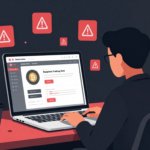
How to Avoid Crypto Scams as a Beginner
What to Actually Buy With Your First $100
The Mythology of Crypto Investing
This is where the mythology around crypto investing does the most damage. New investors are constantly told that the real money is in finding the next Bitcoin early — in buying obscure coins before they explode in value. That narrative is survivorship bias at its most dangerous. For every story of someone turning $100 into $50,000 on an altcoin, there are hundreds of people who turned $100 into $4 and never talked about it publicly.
Recommended First Investment
For a first investment of $100, the only assets worth considering seriously are Bitcoin (BTC) and Ethereum (ETH). Not because they are guaranteed to perform well, but because they have the longest track records, the deepest liquidity, and the most transparent on-chain activity of any crypto assets available.
Risk Comparison: BTC/ETH vs Altcoins
When markets get volatile — and they will — obscure altcoins can lose 90% of their value in weeks. BTC and ETH have done that too, but they have also recovered. Most small altcoins never do.
Beginner Allocation Examples for $100
| Allocation Approach | Bitcoin (BTC) | Ethereum (ETH) | Other Altcoins | Risk Level |
|---|---|---|---|---|
| Conservative (suits most beginners) | $80 | $20 | $0 | Lower |
| Balanced (some diversification) | $60 | $30 | $10 | Medium |
| Speculative (not recommended for first-timers) | $30 | $30 | $40 | Higher |
The conservative allocation is the right starting point for most people reading this. The reasoning is straightforward: you don’t yet have a feel for how it actually feels to watch an asset drop 30% in 48 hours. Until you do, concentrating in the most established assets reduces the chance that your first experience involves watching most of your money disappear into a coin that never recovers.
The $10 altcoin allocation in the balanced approach is not a recommendation to speculate. It is an acknowledgment that some investors will do it regardless, and a small controlled exposure is better than going all-in on a tip.
Understanding Fees Before You Spend a Dollar
At the $100 level, fees are not a minor inconvenience. They are a structural problem that you need to plan around.
Most exchanges charge between 0.5% and 3.5% per trade depending on the platform and payment method. Buying with a debit card is typically more expensive than a bank transfer. On a $100 purchase, a 1.5% fee costs you $1.50. That sounds trivial until you realize you need the asset to appreciate 1.5% just to break even on the trade, before accounting for the fee you’ll pay again when you sell.
Network fees — sometimes called gas fees in the case of Ethereum — are charged separately when you move crypto off an exchange and into a personal wallet. These fluctuate based on network congestion and can sometimes exceed $5–$15 for Ethereum transactions during peak periods. For a $100 investment, a $10 network fee represents a 10% immediate loss on the transaction. Timing your transfers to off-peak hours or using Bitcoin’s simpler fee structure can reduce this significantly.
The honest assessment: at $100, you are not investing to build serious wealth. You are investing to learn the system. Accept the fees as part of that education cost, but track every one of them so you understand exactly what each trade actually costs you in total.
The Security Setup Most Beginners Skip Entirely
Leaving your crypto on an exchange is a risk that experienced investors understand and manage deliberately. For a beginner, it is a habit that feels harmless until it isn’t.
Exchanges get hacked. This is not speculation — it is documented history. Mt. Gox, Bitfinex, Cryptopia, FTX. In each case, users who held large balances on the platform lost funds. The risk is lower on well-regulated exchanges today than it was in 2014, but it has not been eliminated.
For $100, the risk of an exchange hack is real but manageable. Where the risk becomes unacceptable is phishing. Fake exchange websites, fake customer support emails, fake wallet apps on app stores — these are active, ongoing threats targeting crypto users specifically. The most common attack vector is not technical. It is social. Someone pretending to be exchange support asking for your login credentials or seed phrase.
Your seed phrase — the 12 or 24 word recovery phrase generated when you set up a personal crypto wallet — should never be typed into any website, app, or chat window under any circumstances. No legitimate exchange or wallet provider will ever ask for it. If anyone asks you for it, they are attempting to steal your funds.
For $100 held on a reputable exchange, keeping it on the exchange with strong 2FA enabled is acceptable. Once your investment grows to a point where losing it would cause real financial stress, moving it to a hardware wallet like a Ledger or Trezor is worth the additional setup cost.
Dollar-Cost Averaging: The Only Strategy Worth Considering at This Stage
Trying to time the market on a $100 investment is not just unnecessary — it is actively counterproductive. Crypto markets move on news cycles, social media sentiment, regulatory announcements, and macroeconomic data simultaneously. Professional traders with sophisticated tools get timing wrong regularly. A first-time investor checking price charts on a phone has no informational edge whatsoever.
Dollar-cost averaging (DCA) means investing a fixed amount at regular intervals regardless of the current price. If you invest $25 per month over four months rather than $100 all at once, you automatically buy more units when the price is low and fewer when the price is high. Over time, this reduces the impact of buying at a temporary peak.
This strategy is not exciting. It does not promise large short-term returns. That is precisely why it works as an entry strategy for new investors — it removes the psychological pressure of trying to pick the perfect entry point, which is a pressure that leads to poor decisions.
It also scales naturally. If you start with $25 monthly and your confidence and financial situation grow, increasing that amount later is straightforward. The habit is more valuable than the specific amount.
When This Approach Fails or Becomes Risky
1. Introduction / Strategy Overview
Dollar-cost averaging into Bitcoin and Ethereum with small amounts is a reasonable starting strategy. However, it is not a strategy without failure conditions.
2. Failure Condition 1 – Investing money you cannot afford to lock up
The most obvious failure scenario is investing money you cannot afford to lock up. Crypto markets can enter extended bear cycles — for example, the 2022 downturn saw Bitcoin fall roughly 75% from its peak and stay below that peak for over a year. If the $100 you invest represents money you might need for an emergency expense in three months, and the market drops sharply, you are now either selling at a loss or unable to access funds you need. This is not a hypothetical — it happens regularly to people who treated discretionary investing as separate from their actual financial position.
3. Failure Condition 2 – Scope creep
The second failure condition is scope creep. A beginner starts with $100 in Bitcoin, makes a small gain, and gradually shifts toward higher-risk altcoins because the modest returns on BTC feel slow. This is the cycle that has destroyed more small crypto portfolios than any market crash. The assets that offer the highest potential upside in crypto are also the assets most likely to go to zero. This is not a coincidence — it is how risk works.
4. Failure Condition 3 – Tax ignorance
The third failure condition is tax ignorance. In the USA, the UK, and Canada, cryptocurrency is treated as a taxable asset. Every time you sell, trade, or in some jurisdictions spend crypto, you create a taxable event. Keeping no records of your purchase price and sale price is a compliance problem that grows more complicated the longer you ignore it. The IRS, HMRC, and CRA all treat unreported crypto gains as taxable income. Starting with $100 does not exempt you from these obligations — it just means the amounts are small enough to manage easily if you track them from the beginning. The Canada Revenue Agency’s guidance on crypto taxation and the IRS’s virtual currency FAQ are worth reading before you make your first purchase, not after.
Two Common Beliefs Worth Challenging
“Crypto is too complicated for regular people.” This is outdated. The user experience on major exchanges today is comparable to opening a brokerage account. The complexity that remains — understanding wallets, private keys, network fees, and tax obligations — is real but learnable. The people who find it too complicated are usually the ones who skipped the foundational reading and jumped straight to trading.
“You need to get in early to make real money.” This belief drives more bad decisions than almost anything else in retail crypto investing. It creates urgency around new coins and tokens that have no track record, no liquidity, and often no legitimate underlying project. Bitcoin in 2024 was not “too late” for an investor focused on long-term value storage rather than short-term speculation. The idea that the opportunity has already passed is a marketing frame used to sell the next speculative asset, not an accurate description of the market.
What to Do Before You Invest a Single Dollar
Check that the exchange you are considering is registered with the relevant financial authority in your country. Set up a separate email address exclusively for your crypto accounts — do not use your main personal or work email. Enable app-based two-factor authentication before depositing anything. Read the fee schedule for both trading and withdrawals on your chosen platform. Decide in advance how long you intend to hold your investment and whether you could afford to lose the full amount without it affecting your financial stability.
If any of those steps feels unnecessary or excessive for a $100 investment, that reaction is worth examining. The people who skip the security and compliance groundwork on small investments are the same people who skip it when the amounts get larger.
FAQ
Can I actually make meaningful returns starting with just $100?
Meaningful in percentage terms, yes — crypto assets have historically seen significant price movements in both directions. Meaningful in dollar terms at $100? Not quickly and not reliably. The honest framing is that your first $100 is primarily education. If it grows, that is a good outcome. If it doesn’t, you’ve paid a reasonable price to understand a system you can engage with more seriously later.
Is it safer to use a crypto ETF instead of buying directly?
In the USA, spot Bitcoin ETFs now exist and are accessible through standard brokerage accounts. For investors who are uncomfortable with exchange security, wallet management, and private key custody, a regulated ETF removes most of those operational risks. The trade-off is that you do not hold actual Bitcoin — you hold a financial product that tracks its price — and you pay a management fee. For pure price exposure with minimal operational complexity, it is a legitimate alternative worth considering.
What happens to my crypto if the exchange shuts down?
If the exchange is solvent and closes in an orderly way, you typically have a window to withdraw funds. If it collapses suddenly — as FTX did in 2022 — recovery depends entirely on what assets the exchange actually held versus what it owed customers. This is why holding crypto you are not actively trading in a personal wallet you control is the safer long-term posture. Exchange custody is a convenience, not a guarantee.
Do I need to report $100 in crypto gains on my taxes?
In the USA, UK, and Canada, yes. The threshold for reporting is not based on the amount invested — it is based on whether a taxable event occurred. Selling crypto for a gain, trading one crypto for another, or in some cases receiving crypto as payment all create taxable events regardless of size. Keeping records from your first transaction makes compliance straightforward. Ignoring it and reconstructing records years later is significantly more difficult.
What is the biggest mistake first-time crypto investors make?
Buying based on price momentum without understanding what they are buying or why. When an asset has recently doubled in price, it feels like evidence that it will continue rising. In crypto markets, rapid price increases are equally likely to precede sharp corrections as they are to signal continued growth. Buying because a price chart is going up is not a strategy — it is pattern-matching on noise.
Should I tell people about my crypto holdings?
Not in detail, and not publicly. Social media posts about crypto holdings, even small ones, attract attention from people running scams, phishing attempts, and social engineering attacks. The crypto space has an unusually high concentration of fraud targeting retail investors specifically because transactions are irreversible and largely anonymous. Discretion is not paranoia — it is a basic operational security habit that experienced investors maintain regardless of portfolio size.
Final Thought
A hundred dollars will not change your financial life. What it can do is give you a firsthand understanding of an asset class that is increasingly difficult to ignore — how it moves, how it is taxed, how custody works, and how your own psychology responds to watching a volatile market in real time.
The investors who do well in crypto over the long run are not the ones who found the right coin at the right moment. They are the ones who built disciplined habits early, kept their exposure within what they could genuinely afford to lose, and did not let short-term price movement push them into decisions they had not thought through.
Start with the basics. Hold what you understand. Keep records from day one. And treat every decision you make with $100 as a rehearsal for the decisions you will make when the stakes are higher — because if you stay in this long enough, they will be.


[…] How to Start Investing in Cryptocurrency Safely with $100 […]
[…] How to Start Investing in Cryptocurrency Safely with $100 […]
[…] who define their minimum requirements after receiving applications are already in a reactive position. They start adjusting standards […]