
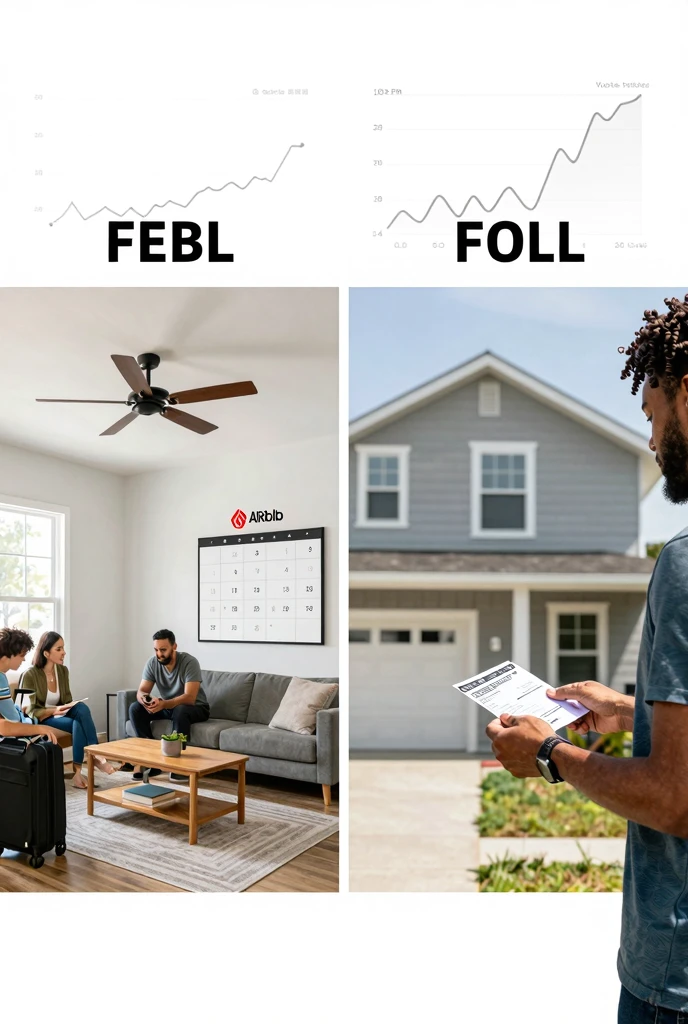
A lot of investors don’t lose money because they buy a bad property. They lose money because they assume the rental strategy will fix everything.
It usually starts with a simple comparison. A condo in a tourist-heavy city looks like it can earn double or even triple on short-term platforms compared to a traditional lease. The spreadsheet looks convincing. Occupancy is assumed at optimistic levels, cleaning fees are underestimated, and financing costs are treated like a background detail.
Then reality shows up in the second year. Occupancy drops. Regulations tighten. Cleaning costs rise. A few slow months wipe out the “strong annual return” that looked so clean on paper.
This is where most investors get it wrong. They compare peak short-term rental income against stable long-term rental income and assume both operate under perfect conditions. In practice, neither does. The decision between these two strategies is less about headline income and more about consistency, control, and what you can survive when the market stops behaving.
Duplex vs Single Family Home Investment USA
Short-Term vs Long-Term Rentals in the U.S.: Which Makes More Money in Real Life
The question of Short-Term vs Long-Term Rentals in the U.S.: Which Makes More Money is usually asked too early in the investment process. It should actually come after a more uncomfortable question: how stable do you need your income to be to keep holding the property when things go wrong?
Short-term rentals, especially in tourist cities like Miami, Nashville, or parts of California, can produce impressive gross revenue. But gross revenue is not profit. That gap is where most inexperienced investors miscalculate.
Long-term rentals look slower on paper. A tenant pays monthly rent, and growth feels gradual. But that stability is often what protects the investor during interest rate spikes, market cooling, or personal cash flow pressure. I wouldn’t treat either strategy as universally superior. I’ve seen investors outperform with both, but only when the property type, location, and management style matched the strategy. The mismatch is what causes most underperformance.
The illusion of high income in short-term rentals
Short-term rentals are often sold as flexible, high-yield assets. The problem is that flexibility comes with hidden volatility.
On a good month, occupancy is high, pricing is dynamic, and income looks far better than a standard lease. But that same flexibility works against you when demand shifts. A slow tourism season, a new competing listing, or a platform algorithm change can reduce bookings without warning.
Maintenance also behaves differently. A long-term tenant treats the home as their base. A short-term guest treats it as temporary space. That difference shows up in furniture wear, utility costs, and turnover frequency. This is where investors underestimate operational intensity. You are not just collecting rent; you are running a hospitality-style business. That means cleaning schedules, guest communication, pricing adjustments, and constant monitoring of occupancy trends.
The most common mistake is assuming management can be fully delegated at low cost. Professional management for short-term rentals often takes a larger percentage of revenue than traditional property management, and that margin matters when occupancy dips.
Long-term rentals and why stability is not “boring income”
Long-term rentals don’t look exciting at first glance. A fixed lease, annual increases, and predictable expenses feel slow compared to nightly pricing fluctuations.
But stability has a financial value that doesn’t show up in basic yield calculations. Mortgage approvals, refinancing options, and portfolio scaling are easier when income is predictable. Vacancy risk is also structurally lower in strong rental markets. Even during economic slowdowns, people still need housing. That demand floor is what keeps long-term rentals resilient when discretionary travel spending drops.
However, this does not mean long-term rentals are automatically safer in all cases. Poor tenant selection, weak local demand, or overleveraged financing can still create serious cash flow pressure. This is where investors often make another mistake: assuming long-term rentals are “hands-off.” They are not. They are just less operationally intensive than short-term rentals.
Cost structure differences that change the real return
Most comparisons focus on revenue, but cost structure determines actual performance.
Short-term rentals typically carry higher:
- Cleaning and turnover costs
- Utilities (often fully covered by owner)
- Furnishing and replacement expenses
- Management fees
- Platform and booking fees
Long-term rentals typically carry:
- Lower turnover costs
- Tenant-paid utilities (in many cases)
- Lower management involvement
- Fewer furnishing requirements
Property taxes, insurance, and financing costs apply to both, but insurance can be higher for short-term rental classifications in many U.S. cities.
Professional investors don’t just compare income. They look at net operating income after vacancy, maintenance, and management friction. That is where many short-term projections quietly break down. A property showing 30% higher gross income in short-term use may end up with only a marginal advantage after costs, especially if occupancy is inconsistent.
Signs a Neighborhood Will Grow in Property Value USA
Regulatory pressure is the risk most investors underestimate
Short-term rental regulation has become one of the most important variables in U.S. property investment over the last decade.
Cities such as New York and Los Angeles have introduced stricter rules around licensing, minimum stay requirements, and owner occupancy conditions. Even where short-term rentals are legal, enforcement can change quickly.
This creates a risk that is not present in long-term leasing: policy uncertainty.
Long-term rentals are deeply embedded in housing law and tenant protection frameworks. They are not immune to regulation changes, but they are far less exposed to sudden operational restrictions. I’ve seen investors build entire models around short-term rental income only to reclassify properties into long-term rentals after local restrictions reduced occupancy eligibility. In those cases, returns dropped sharply because financing was structured around inflated expectations.
When short-term rentals fail in real markets
Short-term rentals fail most often in three conditions:
First, when the property is not in a truly year-round demand location. Seasonal cities can look strong in summer projections but weak in winter cash flow.
Second, when financing costs are high. Rising interest rates reduce margin quickly because short-term rentals depend on high gross income stability to offset debt service. Third, when management quality is inconsistent. Unlike long-term rentals, small operational mistakes compound quickly. A few bad reviews can reduce booking velocity for months. The most painful failure scenario is when investors buy expecting passive income but end up running an active hospitality operation they did not plan for. At that point, the property becomes a job, not an investment.
Common myths that mislead investors
One persistent myth is that short-term rentals always generate higher returns. That is only true under specific conditions: strong tourism demand, supportive regulation, and efficient operations. Remove any one of those and the advantage shrinks quickly.
Another myth is that long-term rentals are low-return and outdated. In reality, many professional investors build stable, scalable portfolios using long-term leases because financing is easier, risk is lower, and scaling is more predictable. A third misunderstanding is that occupancy rates can be assumed at optimistic levels in projections. Markets do not behave like annualized spreadsheets. They fluctuate, and those fluctuations determine real-world performance more than headline pricing.
Professional reality: what investors observe in the field
In practice, short-term rentals behave more like small businesses tied to local demand cycles than traditional real estate holdings.
Long-term rentals behave more like fixed-income assets with property risk layered on top. The biggest difference is not income potential but operational sensitivity to external shocks. Investors who survive long enough in both segments tend to converge on a more conservative assumption set than what they started with.
Who each strategy is actually NOT for
Short-term rentals are not suitable for investors who cannot actively manage operations or tolerate income volatility. If cash flow consistency is required for debt obligations, the variability can become dangerous. Long-term rentals are not ideal for investors expecting rapid income scaling without leverage or portfolio expansion. Growth is slower unless multiple units are acquired. Neither strategy works well for investors who ignore local regulation trends or assume national averages apply to specific cities.
Opportunity cost most investors ignore
Choosing one strategy over the other is not just about return. It’s about what you give up. Short-term rentals require time, attention, and operational oversight. That time has value, even if it is not priced into spreadsheets. Long-term rentals reduce operational burden but may cap short-term income potential in high-demand areas. The wrong choice is not always the lower-return strategy. It is the strategy that does not match the investor’s capacity to manage stress, volatility, and decision frequency.
FAQ
Is this suitable for beginners?
Beginners can enter both short-term and long-term rentals, but the learning curve is very different. I’ve seen first-time investors jump into short-term rentals after watching strong income reports online, only to struggle with pricing, guest management, and cleaning coordination. Long-term rentals are usually easier to handle because the system is simpler: one tenant, one lease, predictable payments. A common mistake is assuming “passive income” means no involvement at all. Even long-term rentals need tenant screening and occasional repairs, just with fewer moving parts and less daily pressure.
What is the biggest mistake people make with this?
The most common mistake is trusting projected income without stress-testing it. I’ve seen investors assume 75–80% occupancy for short-term rentals year-round, then panic when reality drops closer to 55–60% in slower months. Another issue is ignoring hidden costs like furnishing replacement or higher utility bills. One investor I worked with bought a property near a coastal city expecting summer income to carry the year, but winter bookings were almost zero. The mistake wasn’t the strategy—it was not planning for the worst months.
How long does it usually take to see results?
With long-term rentals, you usually see stable cash flow within the first month of renting, but real “results” depend on tenant quality and local demand cycles. Short-term rentals can show strong income within weeks of listing, especially in tourist areas, but that early performance can be misleading. I’ve seen properties perform well for the first two months, then drop after initial demand fades. A practical tip is to track performance over at least one full season before judging success. Early numbers rarely reflect the true annual reality.
Are there any risks or downsides I should know?
Yes, both models carry risks, but they show up differently. Short-term rentals are exposed to sudden demand drops, regulation changes, and platform dependency. A simple policy update in a city can reduce bookings overnight. Long-term rentals carry fewer surprises but still face risks like tenant damage, eviction delays, or long vacancy periods during market downturns. One real-world issue I’ve seen is investors overleveraging based on optimistic rent estimates, then struggling when rents flatten or expenses rise. The safest approach is assuming lower income than projected, not higher.
Who should avoid using this approach?
Short-term rentals are not a good fit for people who need stable monthly income without variation or cannot actively manage operations. Even with a property manager, decisions still come up regularly. Long-term rentals may not suit investors expecting fast income growth or quick capital turnover. I’ve seen people frustrated because returns felt “too slow” compared to what they expected from online examples. If someone cannot tolerate vacancies, repair surprises, or slower appreciation cycles, both strategies can feel stressful. In those cases, other asset classes or more diversified approaches may be more realistic.

[…] Read About : Short vs Long Term Rentals US: Which Makes More Money? […]
[…] Read related : Short vs Long Term Rentals US: Which Makes More Money? […]
[…] high-demand markets across North America and the UK, rental demand remains strong. The most successful investors focus less on appreciation hype and more on […]